Claryoo
Team building PPT for a workshop that changes how people work
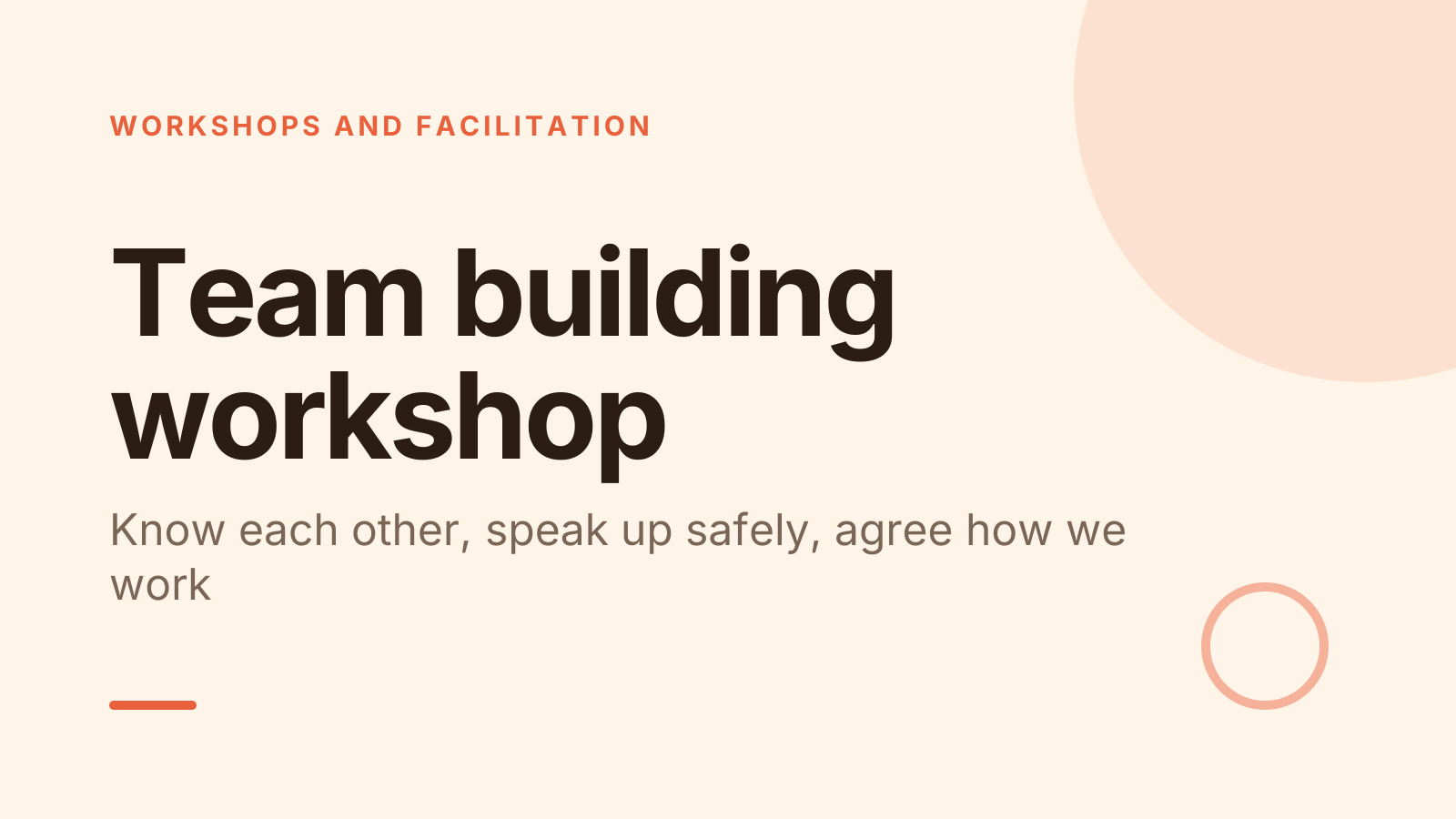
A free team building workshop PowerPoint template: 14 slides with speaker notes, a poll, a quiz and a volunteer pick. Edit it in PowerPoint or Google Slides, or run it live on Zoom, Meet, Teams or in the room.
Free, no sign-up. 14 slides, about 70 minutes, speaker notes on every slide. Opens in PowerPoint, Google Slides and Keynote.
What’s inside
- 1 · Welcome
 2 · Today
- 3 · PollPollAnonymous
How easy is it to admit a mistake on this team?
- AVery easy
- BFairly easy
- CFairly hard
- DVery hard
 4 · Section
- 5 · Trust starts with knowing each other
Trust starts with knowing each other
- 1Start with small sharesAsk low-risk questions like “where did you grow up?” or “what was your first job?”. Trust builds in small steps.
- 2Talk about working stylesEach person says how they like to get feedback and when they do their best work. It saves weeks of guessing.
- 3Leaders go firstWhen the lead shares something real, such as a recent mistake, it shows the rest of the team that it’s safe.
- 6 · Make it safe to speak up
Make it safe to speak up
- 1Thank people for bad newsWhen someone raises a problem, say “thanks for flagging that” before anything else. The reaction teaches everyone.
- 2Ask, don’t just tellEnd updates with a real question such as “what am I missing?” and then wait. Silence often comes before the useful answer.
- 3Treat mistakes as lessonsAsk “what can we learn?” rather than “whose fault was it?”. Focus on the process, not the person.
- 7 · Agree how we work together
Agree how we work together
- 1Write a team agreementFive to seven short lines, such as “we reply to messages within a day” or “we disagree in the room, not after it”.
- 2Make each line testableAvoid “we respect each other”. Prefer something you could notice, such as “cameras on for decisions”.
- 3Review it regularlyCheck the agreement every month or so. Keep what works, change what doesn’t and add what’s missing.
 8 · Discussion
- 9 · QuizQuiz
What makes a team agreement most likely to stick?
- AThe manager writes it
- BThe team writes and reviews itCorrect
- CIt covers every situation
- DIt’s signed by everyone
 10 · Key takeaways
- 11 · Pick a volunteerPick a volunteer
Who shares a team story first?
Type STORY in the chat to be in the draw.
 12 · Next steps
 13 · Close
Show of hands, or everyone’s answer
The first poll works with hands up. Here’s the same question in a sample room of 12, answered live. Tap an answer to join in.
Show of hands
How easy is it to admit a mistake on this team?
About 3 hands go up, the same ones as always. You hear the loudest people, not the room.
Live in Claryoo · 0 of 12 answered · anonymous
LiveHow easy is it to admit a mistake on this team?
Five people find it hard to admit a mistake here. Nobody would have said that out loud. Run it live, free
What the session covers
1.Trust starts with knowing each other
Start with small shares
Ask low-risk questions like “where did you grow up?” or “what was your first job?”. Trust builds in small steps.
Talk about working styles
Each person says how they like to get feedback and when they do their best work. It saves weeks of guessing.
Leaders go first
When the lead shares something real, such as a recent mistake, it shows the rest of the team that it’s safe.
2.Make it safe to speak up
Thank people for bad news
When someone raises a problem, say “thanks for flagging that” before anything else. The reaction teaches everyone.
Ask, don’t just tell
End updates with a real question such as “what am I missing?” and then wait. Silence often comes before the useful answer.
Treat mistakes as lessons
Ask “what can we learn?” rather than “whose fault was it?”. Focus on the process, not the person.
3.Agree how we work together
Write a team agreement
Five to seven short lines, such as “we reply to messages within a day” or “we disagree in the room, not after it”.
Make each line testable
Avoid “we respect each other”. Prefer something you could notice, such as “cameras on for decisions”.
Review it regularly
Check the agreement every month or so. Keep what works, change what doesn’t and add what’s missing.
How to run it, slide by slide
About 70 minutes in all. These notes come with the PowerPoint as speaker notes, so you see them while you present.
- 1Welcome3 min
“Today is about how we work together, not about trust falls. We’ll leave with a short agreement written by us.”
If you lead the team, say you’ll take part as a member, not as the boss, and then do so.
- 2Today2 min
“We’ll get to know each other a little better, talk about speaking up, and then agree a few ways of working.”
Keep it light. Mention that nobody has to share anything they’re not comfortable with.
- 3Poll5 min
“This one is anonymous: how easy is it to admit a mistake on this team?”
If several say hard, thank the group for the honesty and say that today is a chance to change that. Don’t ask who said what.
- 4Section1 min
“Let’s start with something simple: knowing a bit more about each other.”
Move straight into the first lesson.
- 5Trust starts with knowing each other10 min
“Trust usually grows from small moments of openness, not big gestures.”
Run a quick round: everyone answers one personal question and one working style question in under a minute.
- 6Make it safe to speak up10 min
“People bring problems early only when they expect a fair reaction. That’s something we build together.”
Ask pairs to share a time someone handled bad news well and what they did.
- 7Agree how we work together8 min
“Good intentions fade. A short written agreement keeps them alive.”
Show two example lines, one vague and one testable, and ask the group which is easier to keep.
- 8Discussion12 min
“Think of your day-to-day work: what’s one thing that would make working together easier?”
Collect answers on sticky notes or a board and group similar ones. These become the draft team agreement.
- 9Quiz3 min
“Quick check: what makes a team agreement most likely to stick?”
- 10Key takeaways3 min
“Three things to take away: small shares build trust, thank people for bad news and write down how we work.”
Ask one person which of the three they’ll try first.
- 11Pick a volunteer8 min
“Let’s hear a team story: a time we worked well together and what made it work.”
Run two or three stories. After each, ask what from that story belongs in our agreement.
- 12Next steps3 min
“I’ll share the agreement today. Pick one item to try this week, and we’ll review it together in a month.”
Book the review now so it actually happens.
- 13Close2 min
“Thank you for being open today. This only works if we keep doing it, so let’s keep the conversation going.”
Send the written agreement within a day while it’s fresh.
Techniques that work in this session
From the facilitator playbook: step-by-step, with a short video. Swap one into the discussion slide.

Icebreakers for adults that don't make people cringe
Five no-prep openers that use what adults already have: their stories, phones and expertise.
5 to 20 min4 to 1,000+

Quick energizers for workshops, trainings and large groups
Eleven energizers from 10 seconds to 5 minutes, loud ones and calm ones, for rooms and calls.
10 sec to 5 minAny size
About this team building workshop template
This team building PPT is for team leads, HR partners and facilitators who want more than an icebreaker. Three teaching slides cover building trust through small personal shares, making it safe to speak up and raise mistakes, and writing a team agreement together. Each one comes with an activity the group does in the room, not just a slide to read.
An anonymous poll opens by asking how easy it is to admit a mistake on the team, which tells you more than any show of hands. A short quiz checks what makes an agreement stick, and a random pick chooses who shares a team story. Speaker notes give you the words, timings and what to do when the room goes quiet.
When to use it
- Bringing a new or recently merged team together for the first time
- Resetting how a team works after a tense project or reorganisation
- Running a 60 to 75 minute session at a team offsite or away day
How to use it
- Download the PowerPoint. Every word is editable text, so add your name, your examples and your logo. For Google Slides, upload the file to Google Drive and open it with Google Slides. It also opens in Keynote.
- Read the first slide. It’s hidden when you present and lays out the session minute by minute. Each slide’s speaker notes say what to say, what to do and how long it takes.
- Run the polls your way. Hands up works in any room. To get everyone’s answer, anonymous when it matters, run the same deck live with Claryoo on a Zoom, Google Meet or Teams call, or in the room by QR code. Already edited your PowerPoint? Save it as a PDF and add it to your Claryoo deck.
More on live polls, quizzes and pick a volunteer, or spin the free wheel of names.